

How we replace a worktop, step by step
First the sink, tap and hob are disconnected safely, and the old worktops are cut free and removed. The carcasses are checked along their length: anything that has dropped is packed or refixed, and swollen board near the sink is repaired before the new tops arrive.
Laminate and timber are measured and cut on site. Stone is templated once the units are ready and then made off site, so there is a short gap between templating and fitting. Then the tops go on, the cut-outs are finished, joints are made and sealed, and everything is reconnected and tested.
Templating for stone worktops
Templating records the exact shape of your units and walls, which are rarely perfectly straight. The template captures the sink and hob positions, the tap hole, overhangs and any corners where two pieces meet. The finished tops are made to that template, which is why the units must not move afterwards.
If you are considering quartz or granite, our quartz and granite worktops page explains how the materials differ.
Laminate worktop installation
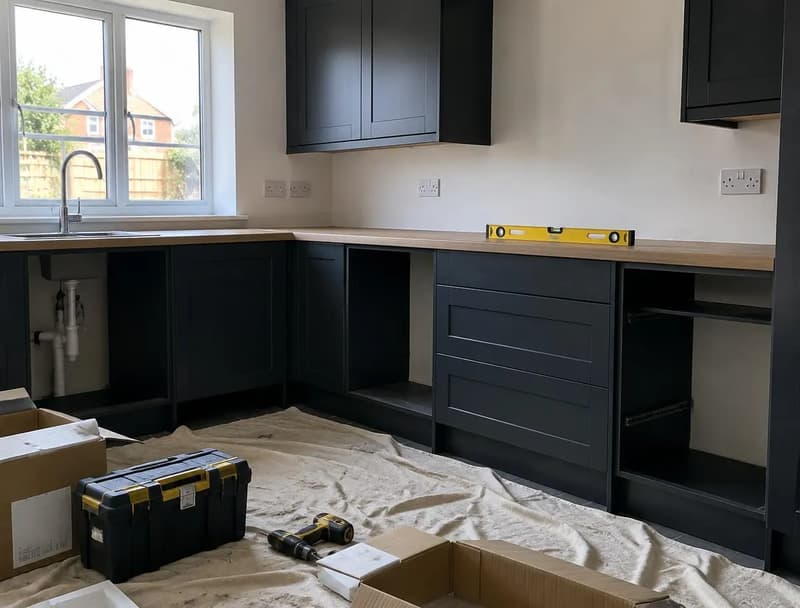
Laminate is fitted in a single visit because it is cut on site. Mitred or jointed corners are glued and bolted, cut edges are sealed so water cannot reach the core, and the sink cut-out is sealed before the sink goes in. Done properly, a laminate top is neat and hard wearing.
Upstands, splashbacks and making good
Lifting old worktops often disturbs tiles or the wall behind. Kitchen upstand installation along the back edge hides that line and protects the wall, or a new tiled splashback can go on instead. Sockets and switches that sit low are checked so they clear the new upstand or tiles.
Our kitchen tiling service covers splashbacks if you want new tiles at the same time.
What the price depends on
The material, the total length, the number of joints and cut-outs, edge profiles and any repairs to the units decide the cost. Our worktop cost guide shows how the materials compare, and your written quote itemises each part of the job.
Keeping the kitchen usable
A worktop swap is far less disruptive than a new kitchen, but the sink and hob are out of use while the tops are changed. With laminate or timber that is normally a short spell. With stone, we plan the removal and fitting around the templating gap so you are without a working sink for as short a time as possible, and you get those dates in writing before we start.
Worktop replacement questions
- How do you replace a worktop?
- Disconnect the sink, tap and hob, remove the old top, check and level the units, then measure or template, cut and fit the new top with its cut-outs, seal the joints and reconnect everything. Stone adds a templating visit before fitting.
- Can I replace worktops in my kitchen without new units?
- Yes, provided the units are level, firmly fixed and strong enough for the new material. Heavy stone sometimes needs extra support, which we check at the survey.
- Do you fit upstands as well?
- Yes. Matching upstands or a new splashback are part of most worktop jobs, because removing the old tops usually marks the wall behind.