
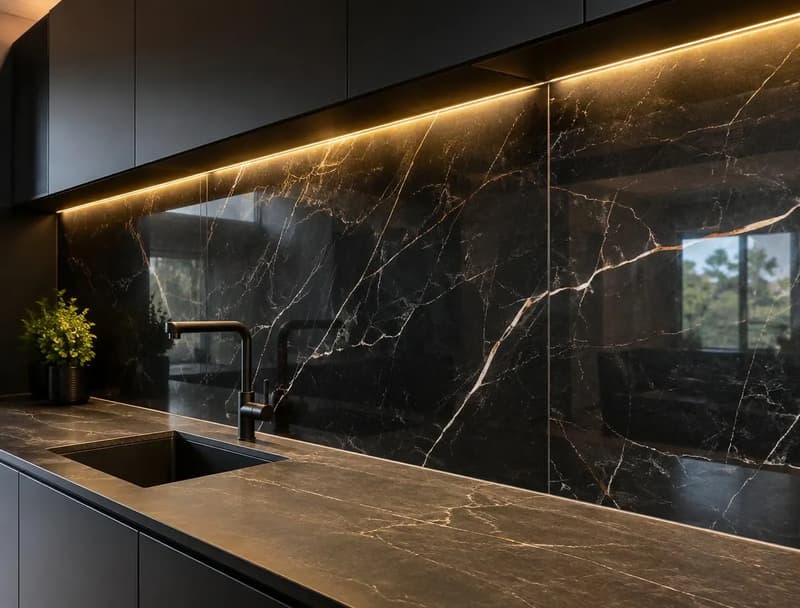
Splashback tiling
A splashback goes on after the worktops are fitted, so the bottom row sits on a finished surface. We work out the set out from the centre of the hob or window so cuts at each end match, and plan around sockets and switches rather than leaving slivers beside them.
Metro, zellige style, large format porcelain and mosaic all suit a kitchen splashback. For ideas on layouts and materials, see our tiled kitchen splashback guide.
Behind the hob
The wall behind a hob takes heat and splashes, so the adhesive and grout are chosen to cope, and the tile has to suit the clearance needed around your cooker. Where tiles meet the worktop, a flexible seal is used rather than grout so normal movement does not crack the joint.
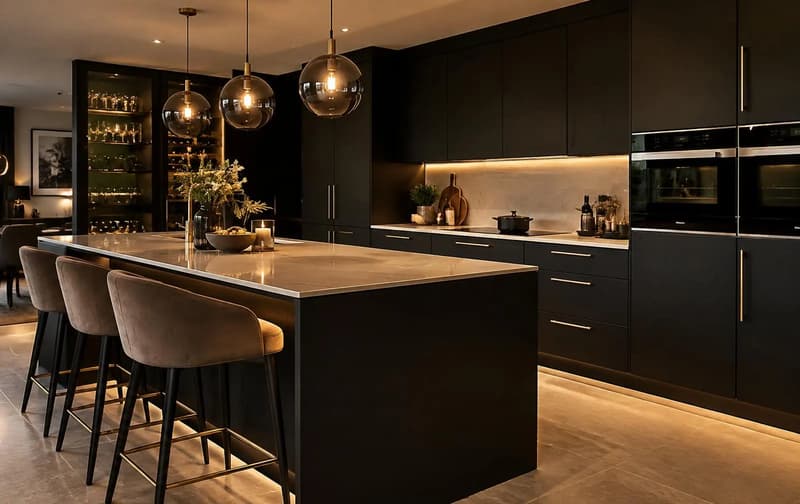
Kitchen floors
A kitchen floor shows every rise and dip along a long run, so we check the subfloor and level it where needed before tiling. Large tiles are back buttered and clipped so neighbouring edges sit flush, and cuts are planned to fall under units and at door thresholds.
The full range of tiling we do around the house is on our tiling service page.
Edges, trims and finishing
Exposed edges are finished with a trim or a neat mitre instead of a thick line of silicone, and grout colour is chosen to suit the tile and how easily it will show cooking marks. Natural stone is sealed before and after grouting.
Tiling within a kitchen fit
When we install a new kitchen, splashback tiling and flooring are built into the programme, so you are not waiting for a separate tiler. We can supply the tiles or fix ones you have chosen.
Kitchen tile installation cost depends on the area, the tile size and material, the pattern and how much preparation the walls or floor need. Our tiling cost guide explains how those factors add up, and your written quote itemises them.
Choosing a tile that works in a kitchen
Glazed ceramic and porcelain are the easiest kitchen tiles to keep clean. Handmade and textured tiles look beautiful but have more surface for grease to settle into, and unsealed stone near a hob needs extra care. On the floor, a tile with some slip resistance is safer where water and spills are common.
Bring samples to the survey and we will hold them against your worktop and units so you can judge them in the room itself.
Kitchen tiling questions
- Do you tile splashbacks on existing kitchens?
- Yes. Old tiles are removed, the wall is made good, and the new splashback is set out around your existing worktop, sockets and hob.
- Should the floor be tiled before or after the units?
- It depends on the floor and the kitchen. We plan it at the survey so the floor runs where it needs to without wasting tiles under the units.
- Can you tile over old kitchen tiles?
- Sometimes, if the old tiles are sound and flat, but removing them usually gives a better, longer lasting result. We check at the survey.