
Need help with kitchen fitting? Get a quote from Herts and Essex Renovations.
Why people choose wood
Timber softens the look of a kitchen in a way stone and laminate rarely do. It is pleasant to touch, it does not chip like a stone edge, and crockery set down on it is less likely to break. It suits shaker and painted kitchens particularly well, and it is often used on an island while a harder material goes round the sink run.
Unlike most worktops, wood can be repaired in place. Scratches, scorches and watermarks can be sanded out and the surface re-oiled, which is impossible with laminate and expensive with stone.
Read more: Kitchen worktop replacement service
Oiling before and after fitting
Raw timber has to be sealed on every face before it is fitted, including the underside and the cut ends, so it takes up moisture evenly. We apply several thin coats of oil, letting each one soak in, before the tops go onto the units. The cut-outs for sinks and hobs are oiled heavily, because exposed end grain drinks water fastest.
After that, little and often is the rule. A light coat every few months for the first year, then whenever water stops beading on the surface, keeps the top protected.
Around sinks, taps and hobs
The sink area is where most wooden worktops fail. An undermount sink leaves the cut edge of the timber permanently exposed to splashes, so an inset sink with a sealed rim is usually kinder to wood. Drainer grooves cut into the top look good but need extra oiling. Taps are fitted with sealed washers and the tap hole oiled before the tap goes in.
Near a hob, keep pans on a trivet rather than straight on the timber, and leave the clearance the hob manufacturer specifies to the worktop edge.
Kitchen fitting
- Strip out, plastering and making good
- First and second fix electrics and plumbing
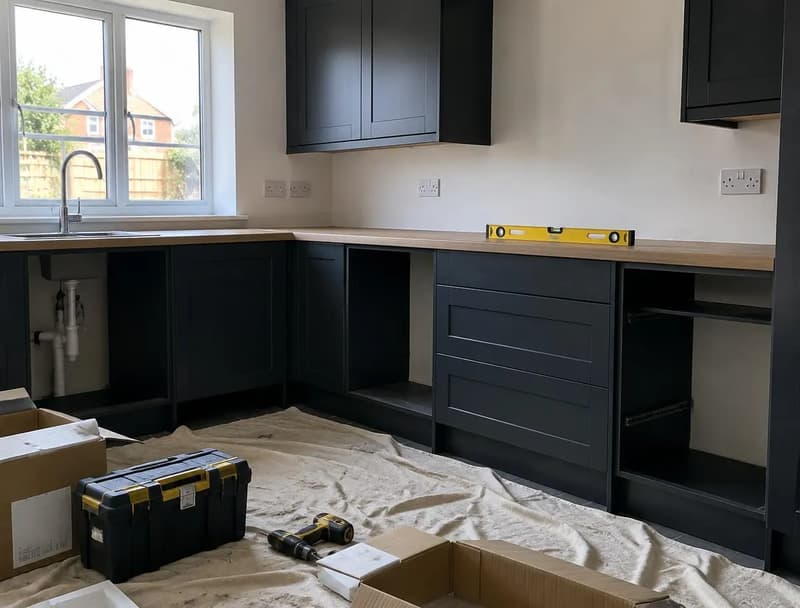
- Units fitted level, worktops templated and scribed
Movement, expansion gaps and fixing
Wood expands across its width as humidity rises and shrinks as it falls. If a top is screwed rigidly to the units it cannot move, and it will crack or bow. We fix it with slotted brackets that let it slide, leave a small gap against walls hidden by upstands or tiles, and avoid boxing it in tightly at either end. Joints between lengths are bolted and glued so they stay flush through the seasons.
Marks, stains and sanding back
Water left standing under a kettle or a wet cloth leaves dark rings where iron in the water reacts with tannins in oak. Red wine and beetroot stain too. Light marks lift with a fine abrasive and fresh oil; deeper ones need a proper sand back of the affected area. Every few years, a full sand and re-oil brings the whole top back to an even finish.
When quartz or laminate suits better
If the kitchen is busy, the sink is in constant use or nobody in the house will keep up with oiling, a non-porous surface is the safer choice. Quartz handles daily abuse with no maintenance, and modern laminate is far better than it used to be. Plenty of homes split the difference with wood on the island and quartz or laminate round the sink. Our worktop cost guide compares the options, and the shaker or handleless guide covers which door styles sit best with timber.
Read more: Kitchen worktop replacement cost, Shaker or handleless kitchen
Choosing the timber and the stave width
Most solid wood worktops are made from strips of timber, called staves, glued together edge to edge. Oak is the most popular because it is hard, widely available and darkens attractively with age. Walnut is richer in colour and a little softer, while beech and ash are paler and tend to move more with changes in humidity. Iroko and other dense hardwoods cope better around water but cost more.
Wide staves show more of the grain and look closer to a single plank, though they can move more. Narrow staves look busier but are generally more stable. Full stave tops, where each strip runs the whole length of the worktop, look cleaner than finger jointed ones with short pieces butted together. Thickness matters too: a thicker top feels more solid and gives more material to sand back over the years, which is part of why wood can last so long when it is looked after.
Want a professional to handle it?
Send us the room details and we will come back with a written quote, or call us for a chat first.
Common questions
- How often do solid wood worktops need oiling?
- Every few months in the first year, then whenever water stops beading on the surface. Areas around the sink need it more often.
- Can you have a solid wood worktop next to a sink?
- Yes, with well oiled cut edges, a sealed sink rim and regular care. An inset sink is usually kinder to timber than an undermount one.
- Why do wooden worktops crack or warp?
- Usually because they were fixed too rigidly, sealed on only one face or left with water standing on them. Timber needs room to move and even protection.
- Can scratches be sanded out of a wood worktop?
- Yes. Light scratches come out with fine abrasive and fresh oil, and the whole top can be sanded back every few years.
- Can hot pans go on solid wood?
- It is best not to. Heat can scorch the surface and dry the timber, so use a trivet or pan stand next to the hob.
The service behind this guide
Covering Hertfordshire and Essex.