
Need help with kitchen fitting? Get a quote from Herts and Essex Renovations.
Shaker: the adaptable all rounder
A shaker door has a flat centre panel inside a simple square frame. It suits period cottages and new builds alike, which is why it is such a common choice. Handles or knobs are fitted to every door and drawer, so the choice of hardware changes the whole character, from traditional cup handles to slim modern bars.
From a fitting point of view shaker is forgiving. The frame detail hides small variations in gaps, and the doors sit over the cabinet in the usual way, so it works well in rooms where walls are out of square.
Handleless: clean lines that demand precision
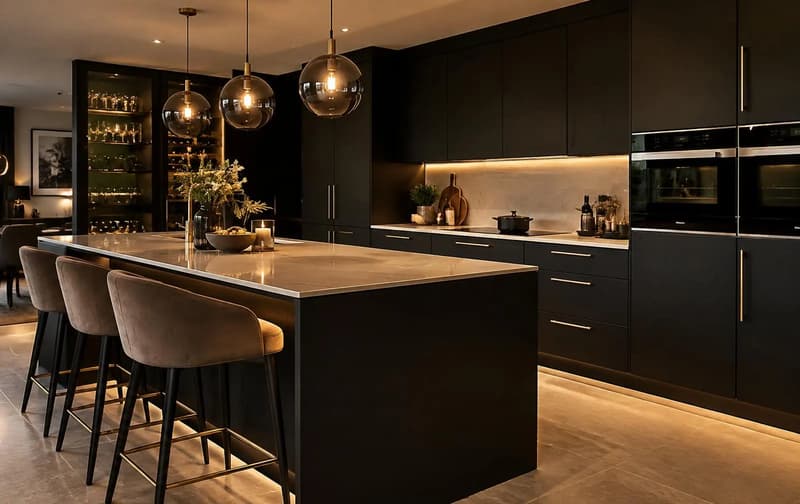
Handleless kitchens use a recessed channel or a shaped edge on the door so there is nothing sticking out. The result is a calm, continuous run of fronts that suits open plan rooms and contemporary extensions.
Because there are no handles to break up the lines, every gap is on show. Units have to be fitted dead level and doors adjusted carefully so the reveals run straight along the whole run. This is where checking floor levels at the survey and scribing panels to the walls really pays off.
- Rail or profile channels need planning around appliances
- Continuous lines show any unevenness in the floor or wall
- Integrated appliance doors must line up with neighbouring fronts
In-frame: the traditional craftsman look
In an in-frame kitchen the doors sit inside a solid face frame rather than over the cabinet. It is the classic look for period properties and country kitchens and gives a solid, furniture like feel.
In-frame is the most demanding of the three to install. The door gaps inside the frame are small and even, so the cabinets must be set perfectly square or the doors will bind or show uneven margins. It rewards a patient installer and a properly level floor.
Kitchen fitting
- Strip out, plastering and making good
- First and second fix electrics and plumbing
- Units fitted level, worktops templated and scribed
How style affects the rest of the room
The choice reaches beyond the doors. Handleless kitchens usually pair with slimmer worktop edges and minimal splashbacks, while shaker and in-frame often sit happily with thicker worktops, metro tiles and traditional taps.
Think about the flooring and decoration at the same time. We handle splashback tiling, flooring and decoration as part of a full installation, so the whole room can be planned as one rather than the doors being chosen in isolation.
Questions to ask yourself before choosing
Do you want the kitchen to blend with the age of the house or contrast with it? Will small children be pulling on doors daily? Is the room part of an open plan space that is on show from the living area? Your answers usually point clearly towards one style.
Whatever you pick, the installation principles stay the same: a proper survey, level carcasses, neat scribes and a clear programme.
Want a professional to handle it?
Send us the room details and we will come back with a written quote, or call us for a chat first.
Common questions
- Do you fit kitchens bought from any supplier?
- Yes. We fit shaker, handleless and in-frame kitchens from every major supplier.
- Which style is hardest to fit?
- In-frame, followed by handleless. Both show any error in levelling or squareness, so the cabinets have to be set very accurately.
- Does a handleless kitchen suit an older house?
- It can, especially in a modern extension off a period home. Out of square walls simply mean more careful scribing.
- Can I change handles on a shaker kitchen later?
- Yes. Swapping hardware is one of the easiest ways to refresh a shaker kitchen without replacing doors.
The service behind this guide
Covering Hertfordshire and Essex.