
Need help with walk-in shower installation? Get a quote from Herts and Essex Renovations.
What each one actually is
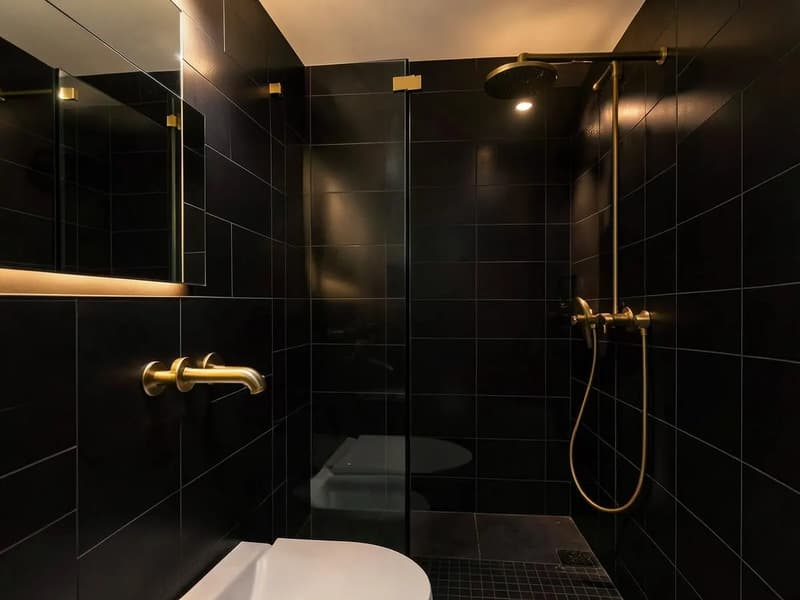
A walk in shower uses a low profile tray, usually 25 to 40mm, with a fixed glass screen and no door. The tray contains the water, and tanking protects the walls around it.
A wet room has no tray at all. The floor itself is formed to fall towards a drain, and the entire floor plus the lower walls are tanked as a single waterproof envelope.
Read more: walk-in shower installation
Cost compared
Prices are for the shower area only, within a wider bathroom project.
| Walk in shower with low profile tray | £2,200 to £4,000 | Faster, suits most floors |
|---|---|---|
| Wet room in a timber floor | £4,000 to £7,000 | Joists must be notched for the former |
| Wet room on a concrete floor | £3,200 to £5,500 | Simpler, screed can take the fall |
Walk-in shower installation
- Low trays, fixed screens and level-access formers
- Wet areas tanked and set to accurate falls
- Old baths swapped for a walk-in shower
Which one your floor can take
On a concrete ground floor, either works. On a suspended timber floor upstairs, a wet room needs the former set between joists, which sometimes means trimming or doubling joists and is not always possible without structural work. A low profile tray avoids all of that.
We check the joist direction and depth at survey before recommending either, because the answer is often decided by the floor rather than by taste.
Living with each one
A wet room is easier to clean and genuinely step free, which matters for accessibility. Its downside is that the whole room gets damp, so the extraction and the towel position need thinking about. A walk in shower keeps the water contained, dries faster and costs less, but has a small upstand at the entry.
Want a professional to handle it?
Send us the room details and we will come back with a written quote, or call us for a chat first.
Common questions
- Is a wet room a bad idea upstairs?
- Not at all, but it needs the former set into the joists and the tanking done to the letter. We survey the floor structure before recommending one upstairs, and sometimes a low profile tray is the sensible answer.
- Does a wet room make the whole bathroom wet?
- The floor gets damp beyond the shower zone, yes. Good extraction, a heated towel rail and a well placed screen keep that manageable.
- Which adds more value to a house?
- Both read as an upgrade over a dated over bath shower. A wet room stands out more in a second bathroom or en suite, while most family bathrooms still benefit from keeping a bath.
- How much does converting an over bath shower cost?
- Typically £5,500 to £9,000 for a full conversion to a walk in shower room, including retiling, tanking and resetting the falls.
- Can you fit underfloor heating in a wet room?
- Yes, and it helps the floor dry quickly. It is laid before the tanking and screed, so it has to be decided at design stage rather than added later.
The service behind this guide
Covering Hertfordshire and Essex.