
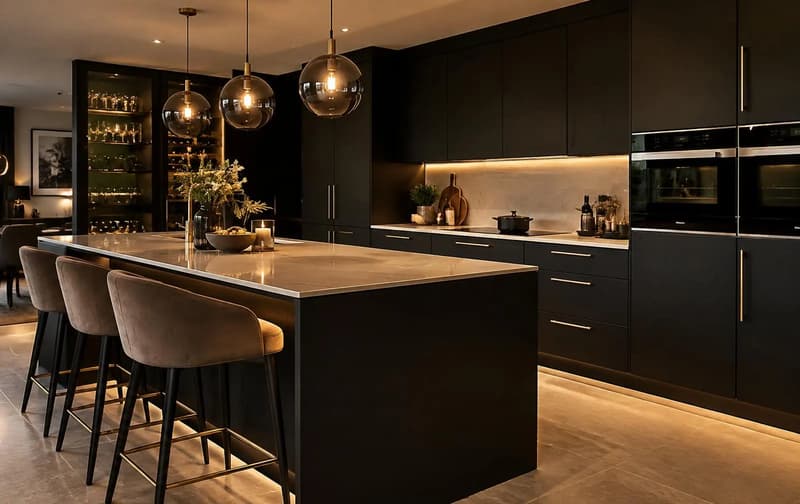
Need help with quartz and granite worktops? Get a quote from Herts and Essex Renovations.
What each material actually is
Granite is a natural stone cut from quarried slabs. Its minerals create variation in colour, grain and pattern, so two pieces described by the same name may look different. Inspecting the selected slab can be more informative than relying on a small sample, particularly when a large island will expose much of its surface.
Quartz worktops are engineered slabs made with mineral content and binders. Their manufactured patterns can be more controlled, including designs that resemble marble or other stone. Product specifications vary, so the term quartz does not establish every performance characteristic. Compare the particular surfaces you are considering rather than treating all examples of either material as identical.
Heat and hot pans
Both materials need sensible use around heat. Granite is generally heat resistant, but sudden temperature changes and localised heating can still be undesirable. Quartz binders can be affected by excessive heat. A pan stand is a straightforward precaution for either surface rather than relying on an assumption that stone cannot be damaged.
Consider small appliances that release heat downward as well as pans taken off the hob. Follow the surface manufacturer's guidance on mats, clearance and prolonged heat. If your routine involves hot trays or large cookware, plan a convenient protected landing area near the oven so care is practical rather than an instruction that is difficult to follow.
Staining and spills
Engineered quartz is generally non-porous and does not normally require the same sealing approach as porous natural stone. That does not make it immune to marks, chemical damage or every spill. Clean according to the product guidance and avoid leaving strongly coloured substances or unsuitable cleaners on the surface.
Granite varies in absorption and may require appropriate sealing depending on the stone and supplier's advice. A sealer reduces vulnerability; it is not a reason to leave spills indefinitely. Check the actual care requirements before choosing, especially if a pale slab or a heavily used preparation area is central to the design. Different stones sold under broad commercial names can behave differently.
Appearance across the whole kitchen
Quartz can suit a kitchen where a consistent background or a repeated pattern is wanted. Granite appeals when the natural mineral structure and variation are part of the design. Neither is automatically more tasteful: judge the surface beside your cabinet finish, flooring and lighting rather than against a catalogue image alone.
Large patterns need considering across openings and joins. A small sample cannot show how a vein passes around a sink or where the next slab will meet it. Ask to see the proposed layout where possible. The underside of an overhang, edge profile and finished end can be visible from the dining area, so appearance includes more than the top face.
Maintenance in everyday use
For either material, simple regular cleaning with appropriate products is preferable to aggressive treatment after a mark appears. Abrasive cleaners, harsh chemicals and metal scraping can alter the finish. Use the supplier's instructions for the particular slab rather than a general internet recipe intended for another material.
With granite, ask whether sealing is required and how its condition should be checked. With quartz, establish which cleaning products and heat precautions apply. A low-maintenance description should not be taken to mean no care at all. If you prefer timber and its different refinishing options, our solid wood worktop guide covers that separate choice.
Read more: solid wood worktop guide
Seams, support and the fitting detail
Slab size, room access, cabinet arrangement and cut-outs influence where joins can go. A seam is not simply a line placed wherever it is least visible: the fabricator must consider handling, support and the shape of the components. A long island or an awkward route into the house may affect the proposal.
Units need to be level and provide the support required by the surface specification. Sink openings, hob openings and unsupported overhangs deserve particular attention. Our quartz and granite installation page discusses that fitting scope. Stone supply and worktop-only jobs need confirmation; this comparison does not imply a supply partnership or specialist repair service.
Read more: quartz and granite installation page
Free quote
Need it sorted? Book quartz and granite worktop fitting
Send your layout and the surface you are considering. Stone supply and worktop-only scope need confirmation before ordering.
Choose from your routine, not a headline
Ask which surface best fits your cooking habits, tolerance for variation and willingness to follow its care guidance. Compare real samples and, for a strongly patterned natural slab, the slab itself. Consider how the chosen finish meets the sink, splashback and seating edge rather than judging only its colour.
This page intentionally gives no prices. The worktop cost guide is the separate place to discuss cost information already on the site, avoiding a second version here. For a fitting enquiry, send the layout, cabinet condition, preferred material and any retained sink or hob. Ask who will handle templating and fabrication before placing an order around assumptions about the installation.
Read more: worktop cost guide
Want a professional to handle it?
Send us the room details and we will come back with a written quote, or call us for a chat first.
Common questions
- Is quartz better than granite?
- Not universally. Quartz can offer controlled appearance and generally low porosity, while granite offers natural variation. Compare heat precautions, care, the selected slab and your daily use rather than choosing a winner from the material name alone.
- Does granite always need sealing?
- It depends on the stone and the supplier guidance. Absorption varies between slabs and types. Ask what sealing is appropriate for the chosen material and how to check its condition, rather than applying a schedule intended for a different stone.
- Can quartz and granite worktops have visible seams?
- Yes. Slab dimensions, access, cut-outs and support can make joins necessary. Discuss their planned position and appearance with the fabricator. Neither material name guarantees a single seamless piece for every kitchen.
- Can I put hot pans straight onto either surface?
- Use a suitable pan stand and follow the product care instructions. Excessive or concentrated heat can damage quartz binders, while thermal shock can be a concern for natural stone. Heat resistance is not an unconditional promise against damage.
The service behind this guide
Covering Hertfordshire and Essex.