
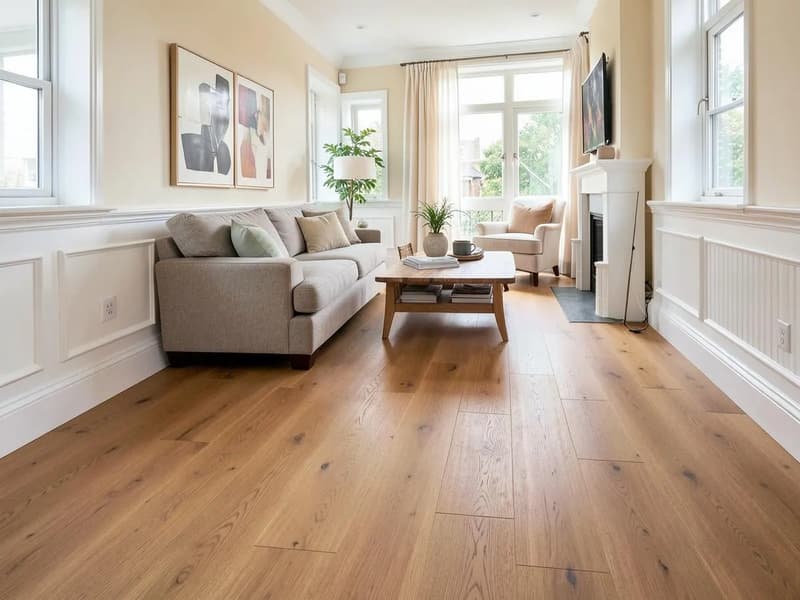
Why LVT suits kitchens, hallways and bathrooms
Kitchens and hallways take spills, muddy boots and constant traffic, and LVT shrugs all three off. It is waterproof across its surface, softer and warmer underfoot than tile, and noticeably quieter than laminate. In bathrooms it copes with standing water that would swell a laminate plank within months.
It is also thin, which matters more than people expect: it can often go down without raising the floor enough to foul doors or create a trip point at the threshold. The full range of floors we fit is on our flooring service page.
Glue-down or click
Glue-down LVT is stuck directly to the prepared subfloor, so nothing moves and the floor feels solid. It suits kitchens with heavy appliances, rooms with underfloor heating and larger open areas. Click LVT locks together as a floating floor, lays faster and lets a damaged plank be swapped later.
Neither is automatically better. The condition of your subfloor, whether you have underfloor heating and how the room is used decide it, and we recommend one or the other at the survey rather than from a photograph.
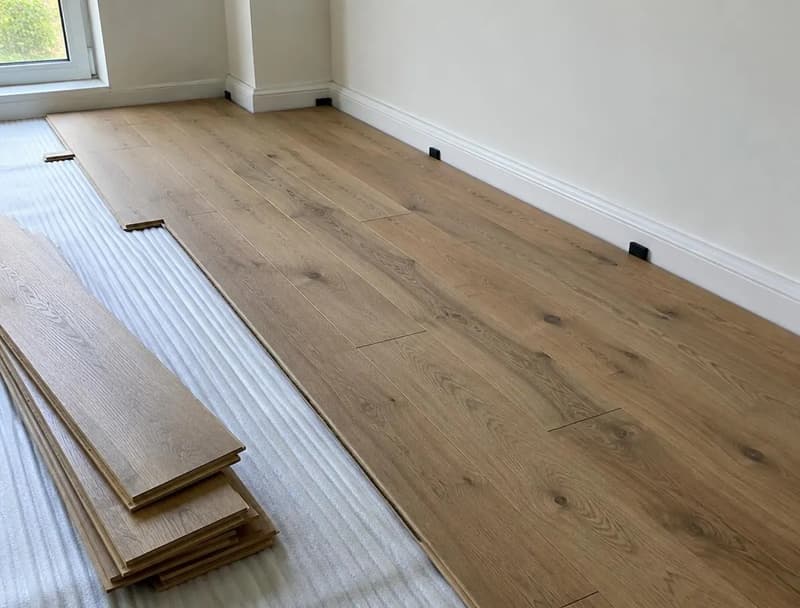
The preparation that decides how it looks
LVT is thin and flexible, so it telegraphs every bump and hollow through to the surface. Uneven concrete gets a self levelling compound, timber floors are overboarded or screwed down, and damp readings are taken before anything is laid. Skip any of that and the joints show within weeks.
Our guide to sorting an uneven subfloor explains how we choose between levelling compound and overboarding.
Plank, tile effect and herringbone
Most LVT is laid as a straightforward plank or tile effect, but it also comes in herringbone formats that give a parquet look without parquet maintenance. Herringbone is set out from the centre of the room and takes longer to lay, which our herringbone fitting guide covers in detail.
One floor through kitchen and hall
Running a single LVT floor through the kitchen and hallway removes the threshold strips that chop a ground floor into boxes, and it makes narrow halls feel wider. Where a kitchen refit is part of the plan, the floor is laid at the right point in the programme so it runs straight under the new units.
LVT also works well over underfloor heating, provided the floor sensor and maximum temperature are respected. Our guide to underfloor heating in kitchens and bathrooms explains the general principles, and we confirm the details for your system at the survey.
What we check at the survey
Before quoting we look at what the new floor has to live with: the material and condition of the subfloor, moisture readings where there is any doubt, door clearances over the finished height, and how the new floor will meet the rooms it joins. That visit is also when we talk through glue-down against click, the laying pattern and whether any old covering needs lifting first.
You then get a written, itemised quote that separates the preparation from the laying, so you can see exactly what the floor costs and why.
Finishing and cost factors
The last ten percent of the job is what you look at every day: scribes around door linings, kickboards refitted, beading or skirting finished neatly and thresholds level with the next room. We cut these cleanly rather than hiding them under caulk.
What moves the price is the subfloor preparation, the laying pattern, the shape of the room and how much old flooring has to come up. Our LVT cost guide breaks those factors down, and our engineered wood versus LVT comparison helps if you are still choosing. Your written quote then itemises everything for your own rooms, so send the details through our contact form to start.
Questions about LVT
- Can LVT go straight over my old floor tiles?
- Sometimes, if the tiles are sound, flat and firmly stuck. Loose or hollow tiles have to come up, and any height difference at doorways is checked at the survey before we decide.
- Is click or glue-down LVT better for a kitchen?
- Both work. Glue-down stays put under heavy appliances and suits underfloor heating, while click is quicker to lay and easier to lift a plank from later. We recommend one once we have seen the room.
- Can you lay LVT in a bathroom?
- Yes. LVT is waterproof on its surface, warm underfoot and quieter than tile, which makes it a practical bathroom floor when the subfloor is prepared properly.
- Do you move and refit kitchen kickboards and skirting?
- Yes. Kickboards come off and are refitted or scribed to the new floor level, and skirting or beading is dealt with neatly so the expansion gap is hidden.
- How long before I can walk on it?
- Click LVT can be walked on straight away. Glue-down needs a short wait while the adhesive grabs, and we will tell you exactly when furniture can go back at the survey.