
Map the noise without taking the floor apart
Walk the room slowly and note the places that make a sound. Does it happen along one board, near a doorway or over a broad area? Record whether the noise changes when the room is warm, after rain or when furniture is moved. A short video can demonstrate a problem that is hard to describe by email.
Look for visible movement from a safe standing position rather than bouncing heavily on a suspect area. Keep the distinction between sound and weakness: a creak is not proof of structural failure, but a floor that suddenly sags, feels unsafe or has been affected by a leak needs appropriate assessment before further use.
Boards rubbing against boards or fixings
In an older timber floor, a board can move against its neighbour or a fixing as it takes weight. Wear, a loose connection or changes in moisture can contribute. A surface coating cannot reliably stop that movement, and driving screws randomly into the floor introduces a separate risk.
Pipes and electrical cables may run beneath the boards. Their routes must be established before any fixing work is considered. An accessible loose board is different from a noise within a joist connection. The latter may require investigation beyond a routine floor-covering installation; do not assume every squeak is within the flooring fitter's scope.
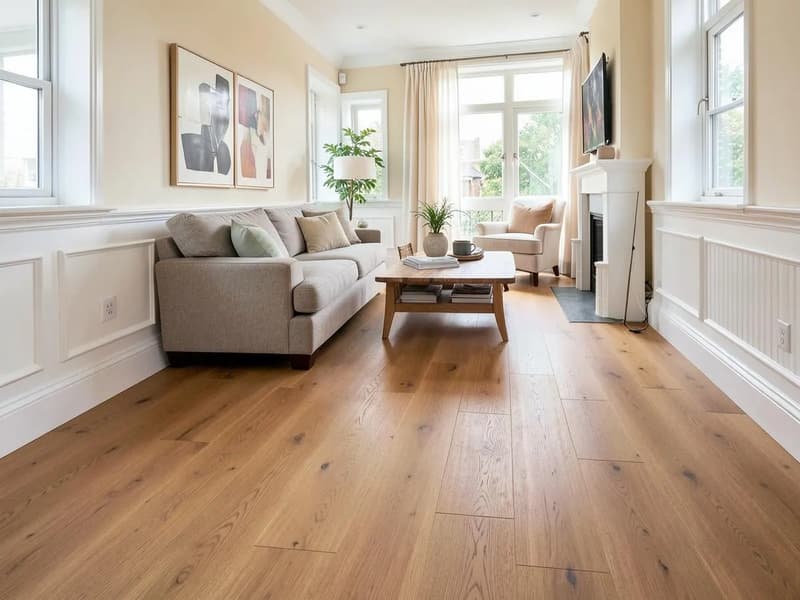
Noise in a floating laminate or wood floor
A floating surface can make noise if its base is uneven, its joints are stressed or its expansion space is obstructed. An unsuitable underlay can allow the boards to flex more than intended. Listen near the edges and transitions, but avoid dismantling locking joints without understanding how that product comes apart.
Check whether skirting, trim or heavy fixed furniture has trapped the floor. Seasonal changes can expose an installation problem that was not obvious at handover. Adding a screw through a floating board may restrain it in the wrong way and damage the system. Diagnosis needs the product instructions and the condition underneath.
Flatness and support are different issues
A floor can be level overall yet have local unsupported areas. Conversely, an older room can slope gently while its boards are firm. A squeak investigation asks where movement occurs, not simply whether a spirit level sits horizontally. A levelling product is not a structural repair.
Our uneven subfloor guide explains preparation before new flooring. Use it to understand the base requirements, not as a recipe to pour compound over loose timber. The underlying support must be suitable for the chosen treatment, and product compatibility matters before anything is covered.
Moisture and recent changes
A new noise after a plumbing leak deserves a moisture check. Timber and board products can change shape as they absorb and release water. Correct the source first and establish the condition of affected materials before discussing another surface. Covering a damp area may hide evidence without solving the cause.
Also consider recent heating changes, a newly removed wall or heavy equipment placed in the room. These are useful facts for assessment, not proof of one diagnosis. Where the concern involves structural movement, ask a suitably qualified professional to investigate it. Floor levelling should only follow once the support is understood.
What a preparation enquiry can cover
The floor levelling page describes the existing subfloor preparation service. Explain the noise alongside your plans for the covering: keeping the present floor, lifting it for investigation or fitting a different material are distinct scopes. Ask what can be inspected before a quote is finalised.
Photographs of thresholds, accessible boards and the wider room help establish context. Include the age of the covering if known, its material and whether the problem is spreading. Do not lift boards near unknown services just to improve the enquiry photographs. Access can be planned safely as part of the assessment.
Avoid masking the symptom
Powder, spray or a thicker underlay may be presented online as a universal squeak cure. These treatments cannot establish whether the problem is a loose fixing, trapped floating floor or damaged support. They can also affect finishes or adhesives, so check product guidance before introducing anything into joints.
The useful outcome is a defined cause and an agreed next step. That might be a limited preparation repair, a change to the installation detail or referral for a different assessment. A quieter floor after a temporary treatment is not evidence that all underlying movement has been corrected.
Questions about the repair options
- Why is my floor squeaking?
- Usually because components rub or move under load, but that can happen at boards, fixings, locking joints or deeper supports. Locate the sound, check recent changes and investigate the base before choosing a repair.
- Will self-levelling compound stop a squeak?
- Not where the substrate remains loose or unsuitable. Levelling materials require a sound compatible base. Establish the movement first; a structural issue or a trapped floating floor needs a different response.