

From the station to Stansted: how the town grew
Bishop's Stortford is framed by its station, the M11 at junction 8 and Stansted Airport, and those three explain most of the housing we decorate. After the railway arrived in 1842, new residential streets grew in the New Town south and west of the core and in Hockerill east of the river. Post-war commuter growth, driven by the M11 and Stansted, added the later estates. All of it sits in the CM23 postcode district.
For decorating, that means two distinct kinds of job. In the Victorian streets, period plaster, cornicing and original joinery need assessing before new finishes are chosen. In the post-war and newer homes, the more common brief is the first proper repaint: upgrading a builder finish to something more durable and personal.
Decorating in the conservation area
The Bishop's Stortford Conservation Area covers the historic core, roughly the town as it stood between 1874 and 1894. It contains 105 listed buildings, 71 of them inside its boundary, and much of it is an Area of Archaeological Significance. The council publishes the appraisal, a management plan and an Article 4 leaflet for the town.
Internal decorating is normally unaffected, but the Article 4 Direction means windows, doors and frontages in the core can need consent from East Hertfordshire District Council. That matters for exterior painting: colours and finishes on a protected frontage should be checked before they are specified, and we confirm the position for your address before quoting external work.
Hockerill interiors and changing light
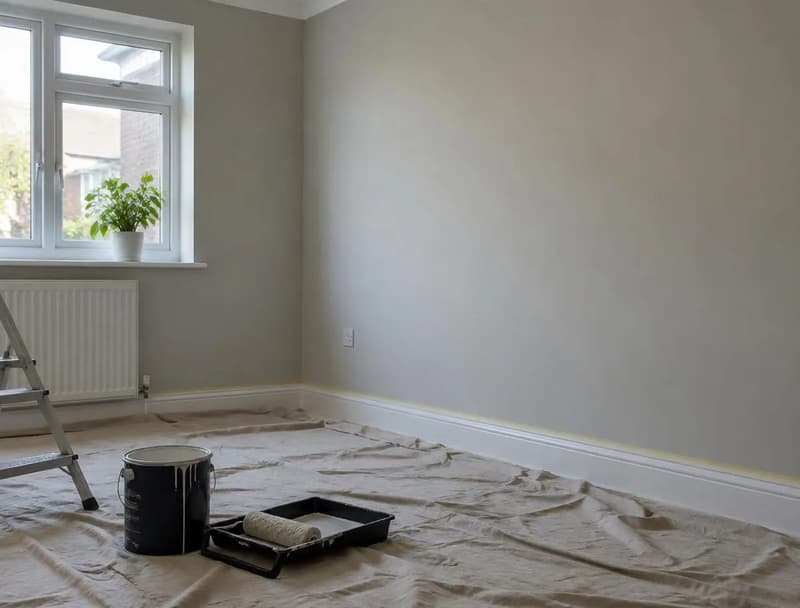
In Hockerill homes, the same palette can read differently across a stairwell, bay-fronted room and rear living space. Test samples in the intended rooms and compare them with retained floors and furniture. A colour decision should reflect the surfaces that will remain, not only the new paint.
Joinery can require a different preparation from the walls beside it. Doors, architraves and railings need their condition checked before a finish is chosen. Include sticking doors, damaged edges or loose coatings in photographs so the enquiry does not cover topcoats alone where other work is necessary.
First repaints in newer homes
A first repaint can be an opportunity to choose a more suitable finish for the way a household uses its rooms. Identify fine cracks, damaged corners and marks before choosing colour. Snagging-type defects need separating from decoration, especially where the builder or another party may still have responsibility.
New plaster and previous coatings influence preparation and drying. Do not assume that every light-coloured wall is ready for the same treatment. Ask what will be filled, sanded or primed and how the selected finish suits the room. A washable label does not remove the need for suitable substrate preparation.
Wallpaper and feature surfaces
Wallpaper can introduce pattern or texture where a painted wall would feel plain, but its alignment and the underlying surface matter. Corners, sockets and chimney breasts influence the hanging plan. Check product and batch details before ordering quantities around the room dimensions.
Our wallpapering page explains that separate service. If paper is being removed first, discuss the condition that might appear beneath it and how further making good will be agreed. A feature wall still needs preparation even though the paper covers its colour.
Exterior finishes are their own enquiry
Exterior timber and masonry need assessment of their existing coatings, condition and moisture exposure. Repainting should follow any necessary repairs, not be used to conceal them. Access and suitable working conditions also affect the proposed work, so include elevations and photographs in the enquiry.
The exterior painting service covers that scope. Keep exterior preparation distinct from an interior room quote, especially where windows or other features require separate attention. No surface finish can compensate for an unresolved leak or an unsound underlying material.
Arrange decorating around other work
A local floor replacement or bathroom refit can alter skirting, door surrounds and adjacent plaster. Agree the sequence before final paintwork starts. The local flooring page and bathroom fitting page explain those room changes without treating all surrounding decoration as automatically included.
Send a room list, photographs and the surfaces to be finished. State whether the house remains occupied and what access is needed. Our town hub connects the wider services; a written decorating quote should make preparation and final coating boundaries clear for your own rooms.
Questions about preparing and decorating
- How do you handle parking and access in the town centre?
- The central streets can be tight, so we plan vehicle access, any permits and where materials are stored before work starts. That keeps a decorating job in an occupied town-centre home workable from day one.
- My home is a Victorian house in the New Town or Hockerill. What changes?
- Older plaster, cornicing and original joinery are checked before finishes are chosen. We agree what is retained, price the preparation openly and match fillers and coatings to the age of the surfaces rather than treating it like new plaster.
- Do I need permission to repaint the front of my house?
- Inside the conservation area, the Article 4 Direction means some external changes need consent from East Hertfordshire District Council. We check your address before quoting exterior work. Internal decorating is normally unaffected.