
Conservation areas and heritage in a New Town
Harlow may be a post-war New Town, but it is not without heritage. Around 201 listed buildings stand nearby, the Water Gardens are a listed landscape, and conservation areas include Old Harlow, Mark Hall North, the Harlow Garden Village Estate, Churchgate Street, Tye Green, Harlowbury, and Town Park and Netteswell Cross. The Lawn, built in 1951, was Britain's first modern residential tower block and is Grade II listed.
Across the district, 53.7% of homes are owner-occupied, 29.3% socially rented and 15.4% privately rented. That mix shows in the work: void redecorations between tenancies with durable finishes, alongside full redecorations for owners settling in for the long term. Both are planned the same way, with proper preparation first and paint second.
Harlow is on our regular run, so a decorating job here gets the same team and the same preparation as one in our home town. You can see the wider picture of our work in the town on our Harlow page, and the full decorating scope on our painting and decorating service page.
Preparation first, paint second
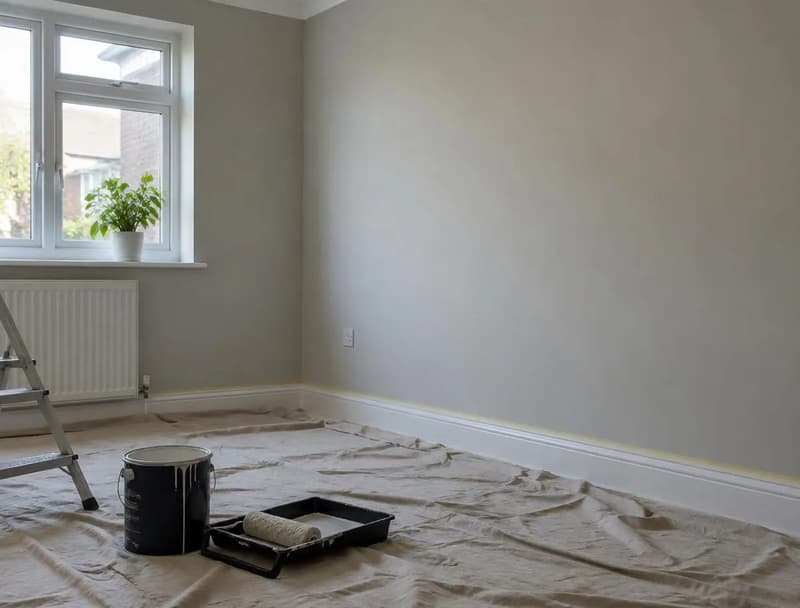
Most of a good finish happens before the topcoat. Cracks and dents are filled and sanded flush, water marks and knots are stain blocked so they cannot bleed back through, bare plaster and timber are primed, and edges are cut in by hand before the walls are rolled.
It is slower than slapping paint over the top, but it is the difference between walls that read flat under daylight and walls that show every repair at four in the afternoon.
What Harlow homes ask of a decorator
Much of the town is post war housing: terraces and town houses with long hallways and stairs, plenty of flat woodwork, and staircases that take daily wear. Those want hard wearing finishes on the woodwork and patient cutting in along long runs of wall and ceiling.
The newer homes in Church Langley and Newhall bring the opposite job: builder finish walls that need mist coats, proper filling of settlement cracks and a first real decoration that the house has never had. We treat the two very differently, and the survey is where that plan gets made.
Working in a lived-in home
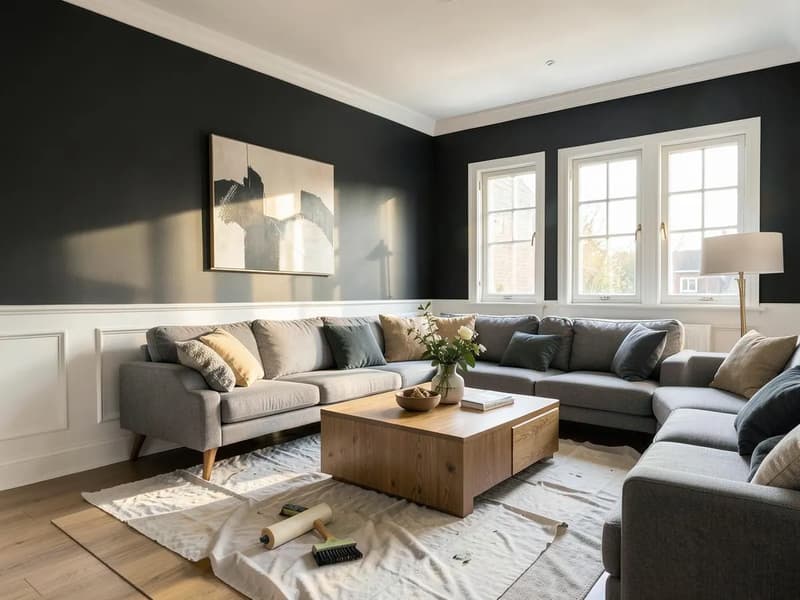
Most decorating happens while you are still living in the house, so how the work is managed matters as much as the finish. Floors and furniture are sheeted before anything is opened, dust is kept to the room being worked on, and everything is cleaned down at the end of each day rather than left for the weekend.
Rooms are planned so the house keeps working: hallways and stairs are done in stages so you can still get around, and bedrooms are finished one at a time so there is always somewhere to sleep.
Wallpaper hanging and removal
We strip old paper, including stubborn woodchip, and hang everything from lining paper to patterned feature walls. Pattern matching around corners and sockets is planned before the first length is cut. Our wallpaper removal guide explains what stripping involves and how the walls are made ready afterwards.
Exterior woodwork and render
Outside, we prepare and paint windows, doors, fascias, masonry and render. Exterior work is planned around dry weather, because paint applied to a damp surface fails early, and we would rather come back on a dry day than leave you with a finish that peels by winter. Article 4 directions in Mark Hall North, Old Harlow and Morley Grove mean exterior colour and finish changes there may need checking with Harlow District Council first.
The last stage of a bigger job
If your decorating follows a kitchen, bathroom or flooring project with us, it is built into the same programme, so the room is handed back finished rather than left for another firm. Decorating can also be booked room by room after a new floor or kitchen. Our flooring in Harlow page covers that side of the work.
Getting a quote
Decorating is priced after seeing the rooms, because preparation time varies so much from house to house. Our decorating cost guide explains what moves the figure. Send the details through our contact form or call us, and we will arrange a visit and put everything in a written, itemised quote.
Questions about decorating in Harlow
- Do you redecorate rental properties between tenancies?
- Yes. Across the district 29.3% of homes are socially rented and 15.4% privately rented, and void redecorations are planned around the gap between tenancies, with durable, washable finishes that stand up to the next let.
- Can you decorate a flat or maisonette with communal access?
- Yes. Around 27% of homes across Harlow are flats or maisonettes, so shared stairwells and entrances are familiar: materials are carried through sheeted communal areas, and working times are agreed with you before we start.
- Do I need permission to change the colour of my exterior woodwork?
- Usually not, but Article 4 directions in Mark Hall North, Old Harlow and Morley Grove can remove permitted development rights, so exterior colour and finish changes there should be checked with Harlow District Council first. We flag it at the survey if your home is affected.
- How do you keep disruption down in a lived-in home?
- Floors and furniture are sheeted, dust is kept to the room being worked on, and everything is cleaned down at the end of each day. Hallways and stairs are done in stages so you can still get around.
- When can exterior painting be done?
- Exterior work is planned around dry weather, because paint applied to a damp surface fails early. We would rather come back on a dry day than leave you with a finish that peels by winter.